
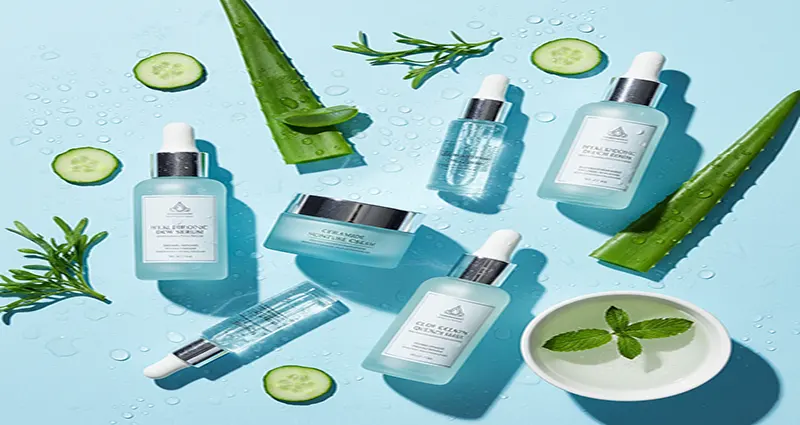
Dry skin is characterized by a lack of moisture and a compromised skin barrier, leading to flakiness, tightness, and sensitivity. Effective dry skin treatment requires a focused approach, relying on powerful hydrating skincare ingredients that not only infuse water into the skin but also prevent that water from escaping. By using the right combination of humectants, emollients, and occlusives, you can restore comfort and achieve a smooth, healthy complexion.
1. Humectants: The Moisture Magnets
Humectants are the backbone of hydration. These ingredients attract water from the atmosphere and deeper layers of the skin into the epidermis (the skin’s outermost layer).
- Hyaluronic Acid (HA): A superstar molecule capable of holding up to 1,000 times its weight in water. HA is an excellent humectant that works by drawing moisture to the skin’s surface, immediately plumping and reducing the appearance of fine lines. For dry skin, look for products containing multiple molecular weights of HA, as smaller molecules can penetrate deeper.
- Glycerin: A simple, highly effective, and widely used humectant. Glycerin is excellent at binding water and is a fundamental component in almost all high-quality moisturizers for dry skin.
- Urea: While also a humectant, Urea acts as a gentle keratolytic, meaning it helps to loosen and shed dead surface skin cells. This dual action makes it particularly valuable for treating extremely dry, rough, or scaly skin, as it aids in deeper water penetration.
2. Emollients: Smoothing and Replenishing
Emollients are responsible for smoothing the skin and filling in the gaps between skin cells (corneocytes). This action improves texture and flexibility, reducing the rough, dry feel.
- Ceramides: These are essential, naturally occurring lipids (fats) that make up a significant portion of the skin barrier. Dry skin often lacks sufficient ceramides.12 Replenishing them through products helps repair the barrier, making the skin more resilient and less prone to moisture loss and irritation.
- Natural Oils (Squalane, Jojoba, Rosehip): These oils closely mimic the skin’s natural sebum. Squalane (derived from olives or sugar cane) is particularly stable and lightweight, offering intense replenishment without feeling greasy, making it an excellent emollient for dry, sensitive skin.
3. Occlusives: The Protective Seal
Occlusives create a physical barrier on the skin’s surface, acting like a protective shield. This layer dramatically reduces Transepidermal Water Loss (TEWL), the process by which water naturally evaporates from the skin.
- Petrolatum (Petroleum Jelly): Although simple, petrolatum is one of the most effective occlusives available, reducing TEWL by over $98\%$. It is non-comedogenic for most people and provides an intense seal, making it ideal for extremely dry areas or as a final layer in an evening routine.
- Shea Butter and Dimethicone: These also function as gentler occlusives. Shea Butter offers a thick, nourishing base with fatty acids, while Dimethicone (a type of silicone) provides a silky, breathable film that locks in moisture without feeling heavy.
Building Your Dry Skin Treatment
For optimal dry skin treatment, your routine should include all three categories: a humectant-rich serum (HA, Glycerin), followed by a moisturizer combining emollients (Ceramides, Oils) and a final protective layer of occlusives (Shea Butter, Petrolatum) to keep all that beautiful moisture locked in.

